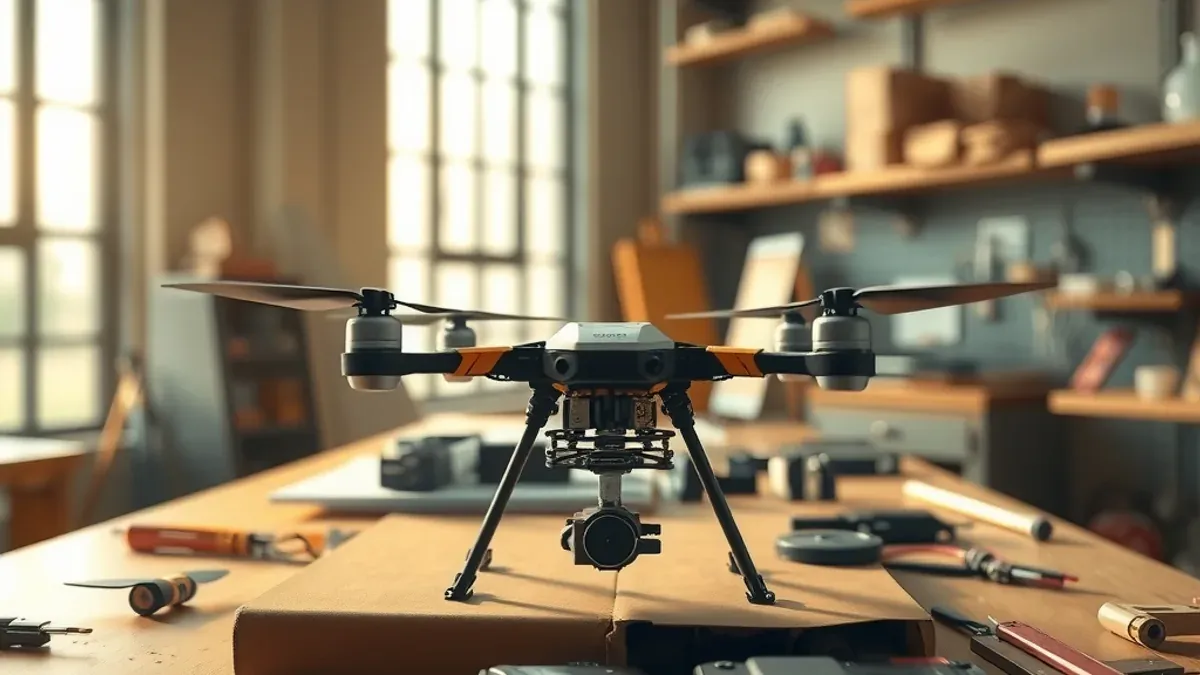
Canada joins the FREYJA anti-ballistic system, while Khmara admits interceptors are in short supply
After talking to Mark Carney, Zelensky said Canada is taking part in the European FREYJA interceptor. The defence minister spoke about destroyed Iskander launchers and countering jet drones.

Canada in the FREYJA project
President Volodymyr Zelensky spoke with Canadian Prime Minister Mark Carney on 11 October. Afterwards he wrote: “It is very good that Canada has actively joined the development of the FREYJA anti-ballistic system together with Europe. This is exactly what can add protection not only for Ukraine but globally.”
According to Zelensky, Carney is well informed about Ukraine’s needs — above all in anti-ballistic defence and winter preparations. The leaders also discussed the energy truce announced by Donald Trump. “Ukraine supports such a step… but now Russia’s answer is needed — what Russia will tell the President of America and whether it will stop striking our energy,” the president said.
As Ukrinform recalls, the FREYJA interceptor is being developed on an accelerated timeline within an anti-ballistic coalition of 10 countries; its first combat test is planned for mid-2027.
Eight launchers hit in September
On the same day Defence Minister Yevhen Khmara told journalists that in September Ukraine’s Defence Forces hit eight launchers that Russia had used for ballistic strikes on Ukraine — Iskander systems and S-400 surface-to-air missile systems. Five were seriously damaged and three completely destroyed. According to the minister, this forced Russia to temporarily postpone planned mass strikes.
At the same time Khmara admitted that the ballistic threat remains critical: “Existing and potential deliveries of missiles for anti-ballistic defence are not enough to fully cover this threat. The Defence Ministry is working with partners to speed up deliveries of the necessary missiles.”
How jet-powered Shaheds are shot down
The minister also described efforts against jet-powered drones. According to him, one unit used five “Bars” interceptors to destroy five aerial targets — “100% effectiveness”. This experience is now being studied and scaled up.
“There are also results from using large-calibre turrets against jet drones. Their number in our arsenal is already measured in the hundreds,” Khmara said, adding that longer-range systems are being developed. Surface-to-air missile systems and MANPADS are also proving effective, and aviation, he said, remains one of the most effective tools, using ever fewer munitions per target.
The minister said Ukraine is aware of Russian development of jet drones flying at up to 800 km/h, and countermeasures against this next generation of threats are being prepared. He also believes that hunting enemy drone operators and ground infrastructure should become a separate specialisation for second-echelon units.
Why it matters
Ballistic missiles are the hardest threat to intercept, and Russia uses them against energy facilities and cities. While FREYJA is still in development, Ukraine depends on supplies of Western interceptors, which, by the minister’s own account, are in short supply. Canada’s participation in the project and strikes on launchers are two parts of the same strategy to protect the skies.
Sources
This is an original short summary. All facts are as reported by the source below.
- Укрінформ: Канада долучилася до розробки спільної з Європою антибалістичної системи FREYJA - ЗеленськийUK
- Суспільне: Сили оборони уразили за вересень вісім російських пускових установок для балістики — ХмараUK
- Українська правда: Хмара розповів про протидію реактивним БпЛА: ефективність перехоплювачів і сотні турелейUK
 More in: Tech