Second night in a row: all Moscow airports closed during drone attack, hundreds of flights disrupted
On the evening of 29 October and overnight into 30 October Russia's aviation agency restricted Sheremetyevo, Vnukovo, Domodedovo, Zhukovsky and Yaroslavl airport. The day before, over 460 flights were disrupted.
What happened overnight
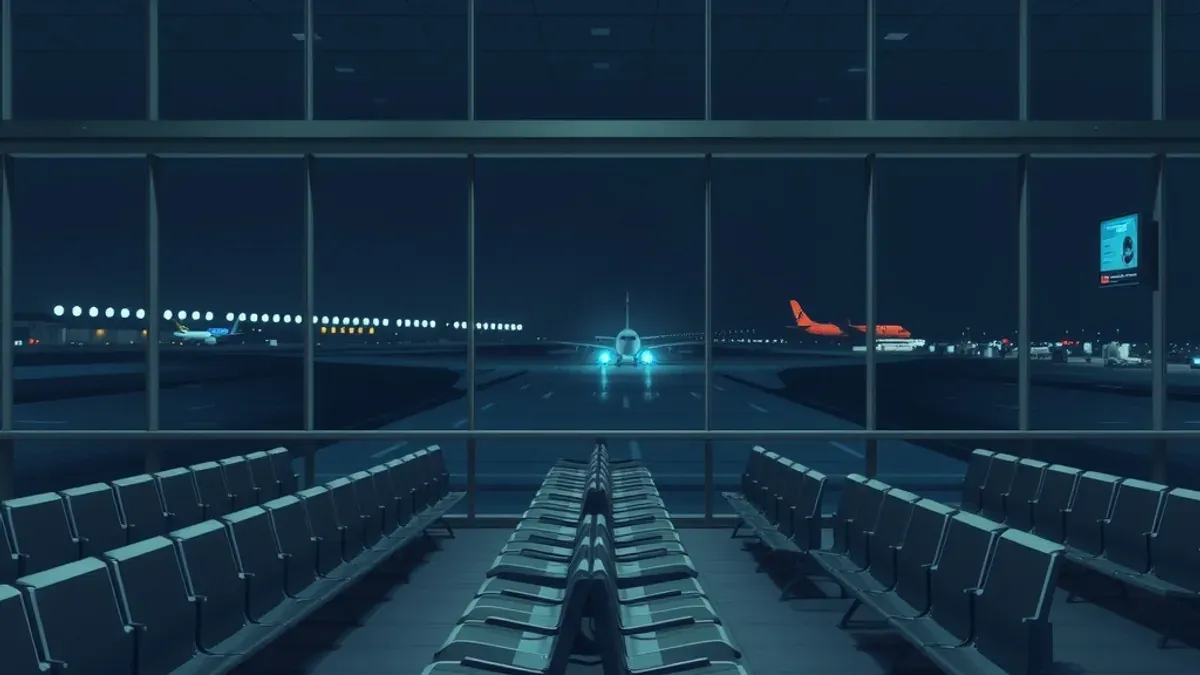
On the evening of 29 October and overnight into 30 October, according to Russia’s aviation agency Rosaviatsia, temporary restrictions on arrivals and departures were imposed at all major Moscow airports — Domodedovo, Vnukovo, Zhukovsky and Sheremetyevo. Yaroslavl airport was also closed. Some flights were diverted to other cities. The independent outlet Astra, citing Flightradar24, reported that the only aircraft left in the sky over Moscow was a government jet of the Rossiya special flight squadron based at Vnukovo.
Moscow mayor Sergei Sobyanin reported 38 drones “shot down” from 22:00 Moscow time and 71 more overnight and in the morning of 30 October, and later said that 862 drones had allegedly been destroyed over Moscow and the Moscow region between Thursday evening and Friday morning. These figures cannot be independently verified, and the Ukrainian military has not commented on them.
Fallout from the previous night
It was the second night in a row of massive attacks on the Russian capital. The previous night Moscow authorities reported more than 600 drones, and Russia’s defence ministry claimed that 1,214 drones were shot down over 18 regions and Moscow overnight and on the morning of 29 October.
According to Astra’s count based on airports.ru data, more than 460 flights were delayed or cancelled at Moscow and St Petersburg airports on 29 October. Vnukovo and Sheremetyevo were hit hardest. St Petersburg outlet Fontanka reported that Pulkovo took in planes that could not land in Moscow. Rosaviatsia lifted restrictions at Vnukovo, Domodedovo and Zhukovsky only at 06:46 local time, and delays continued into the evening.
Luhansk: strike on an infrastructure site
The same evening occupied Luhansk was hit. Petro Andriushchenko, head of the Centre for the Study of Occupation, said a facility that he believes is a data centre was struck; its location is blurred on Russian online maps. After the attack the city suffered a blackout affecting about 150,000 customers, and internet access almost disappeared. A truck park was also hit, with more than 20 vehicles destroyed. Occupation authorities closed roads near Hospital No. 7 and around Poshtova and Magnitogorska streets.
Why it matters
Mass disruption at Moscow airports is becoming routine. According to TSN, more than 210 flights were delayed or cancelled at the capital’s airports on 24 October during an earlier Ukrainian drone attack. In less than a week the number of disrupted flights has more than doubled, and restrictions now hit both day and night operations.
Closing Moscow’s airports two nights in a row is a tangible blow to Russian air travel, which already operates under sanctions and with a shortage of spare parts. Delays and diversions affect tens of thousands of passengers and put extra strain on other airports.
Ukraine has not officially commented on the targets of the attacks on Moscow. President Volodymyr Zelensky said the day before that “long-range sanctions” work much faster than economic ones and that the Stavka had set additional tasks for them. The attacks on Moscow come amid massive Russian strikes on Ukrainian cities: on 29 October alone drones killed 19 people in Dnipro, Chernihiv and Kremenchuk.
Sources
This is an original short summary. All facts are as reported by the source below.
- Українська правда: У РФ закрили всі московські аеропорти на тлі атаки дронівUK
- Укрінформ: У Москві та Петербурзі затримали або скасували понад 460 авіарейсів через атаку дронівUK
- Укрінформ: Українські безпілотники зруйнували головне постове відділення «ЛНР» і знищили понад 20 автівок у ЛуганськуUK
- ТСН: Москва без авіасполучення через атаку БПЛА — закрили всі аеропортиUK
- Al Jazeera: Russia says more than 600 drones launched towards Moscow overnightEN

 More in: Politics & Society