OBRIA NANO: test satellite for a future Ukrainian communications network now operating in orbit
Ukraine's HIMERA and Denmark's GomSpace have put OBRIA NANO, launched on 1 October on a SpaceX rocket, into operation — a first step towards a sovereign, Ukrainian-controlled network after Starlink disruptions.
What was launched
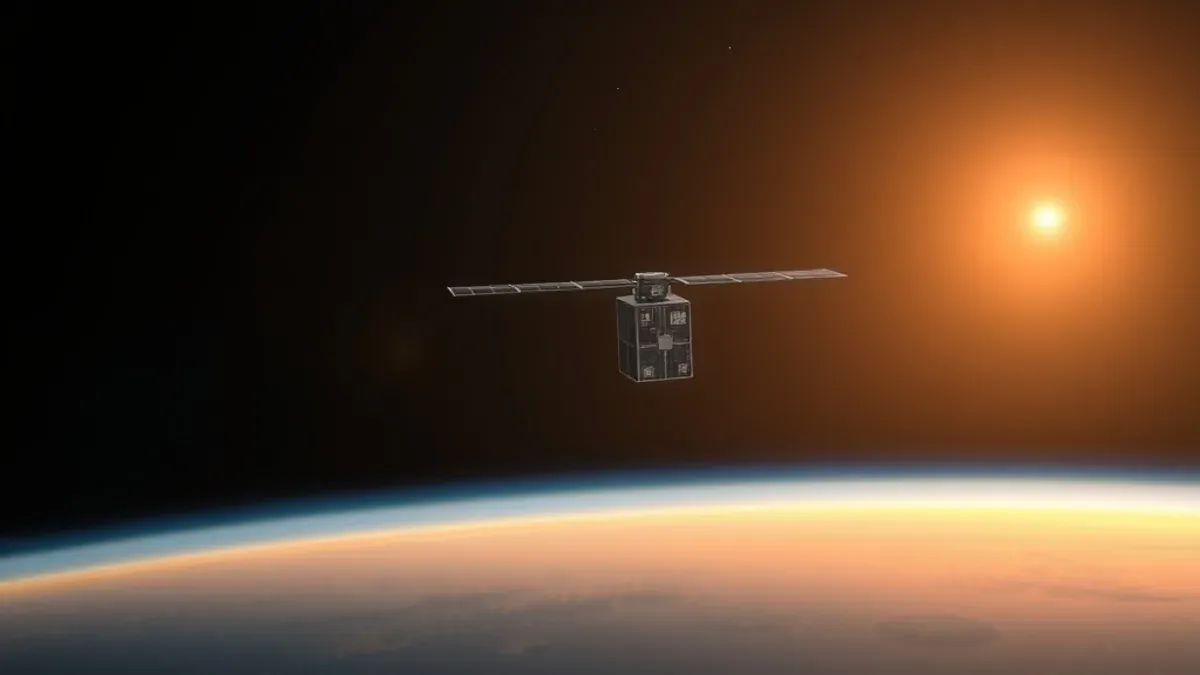
Ukrainian defence tech start-up HIMERA and Danish small-satellite maker GomSpace announced on 27 October that their OBRIA NANO satellite is operating in orbit and undergoing planned tests. The spacecraft was launched on 1 October 2026 as part of SpaceX’s Transporter-18 rideshare mission.
OBRIA NANO is a test satellite. According to GomSpace, it will provide technical trials whose results will feed into the design of a full operational system — a constellation that would provide communications coverage across all of Ukraine and complement European satellite networks. The satellite will be run by a Ukrainian operator and serve the country’s strategic security needs.
Why Ukraine wants its own satellite communications
Since the full-scale invasion, Ukraine has relied heavily on SpaceX’s Starlink and Starshield services. As SpaceNews notes, they have become essential to military command networks, drone operations and communications in areas where terrestrial infrastructure has been destroyed.
However, restrictions imposed in mid-October limited satellite connectivity and, according to the outlet, interfered with Ukrainian drone operations, including efforts to intercept Russian attack drones. On 24 October Ukraine said Starlink and Starshield had returned to normal speeds, but the episode intensified the debate about dependence on a single provider.
OBRIA is one of at least two European-backed initiatives aimed at giving Ukraine greater control over satellite communications. Five days before the HIMERA–GomSpace announcement, Finland’s ICEYE and Nokia signed a letter of intent with Ukraine’s Defence Ministry to explore a sovereign broadband satellite network.
For Ukraine this is not only a military issue: its own satellite communications also matter for the energy sector, logistics and civilian services, which need backup channels amid constant attacks on infrastructure.
Who is behind it
HIMERA was founded in 2022 and develops secure tactical radio systems for the military, including equipment designed to work in electronic warfare environments. GomSpace, headquartered in Aalborg, Denmark, builds small satellites, communications payloads and spacecraft subsystems.
“For us, this project is about more than launching a satellite. It is an opportunity to lay the foundation for an independent communications network for Ukraine. We are starting by testing technologies in orbit, while our long-term goal is to develop capabilities that will strengthen the country’s strategic security and reduce dependence on external communications providers,” said Misha Rudominski, HIMERA’s co-founder and CEO.
GomSpace CEO Carsten Drachmann added: “Our shared goal is to strengthen Ukraine’s independent communications capabilities and to support the country’s long-term security and economic development.”
What comes next
The companies say the next important step will be localising the production of satellites and ground terminals in Ukraine. At the same time, SpaceNews points out that the partners did not disclose the satellite’s specifications, communications capacity, project financing or the number of satellites envisioned for the network.
It is worth keeping the scale in perspective: neither European initiative is expected to replace Starlink’s global network. But smaller national constellations could provide dedicated communications for selected military tasks and serve as a backup in case of new disruptions.
Also note: OBRIA NANO is not Ukraine’s first satellite ever. The country has had its own spacecraft before, including Sich-1 (1995) and Sich-2-30 (2022). What is new about OBRIA is its focus on sovereign communications.
Sources
This is an original short summary. All facts are as reported by the source below.

 More in: Tech